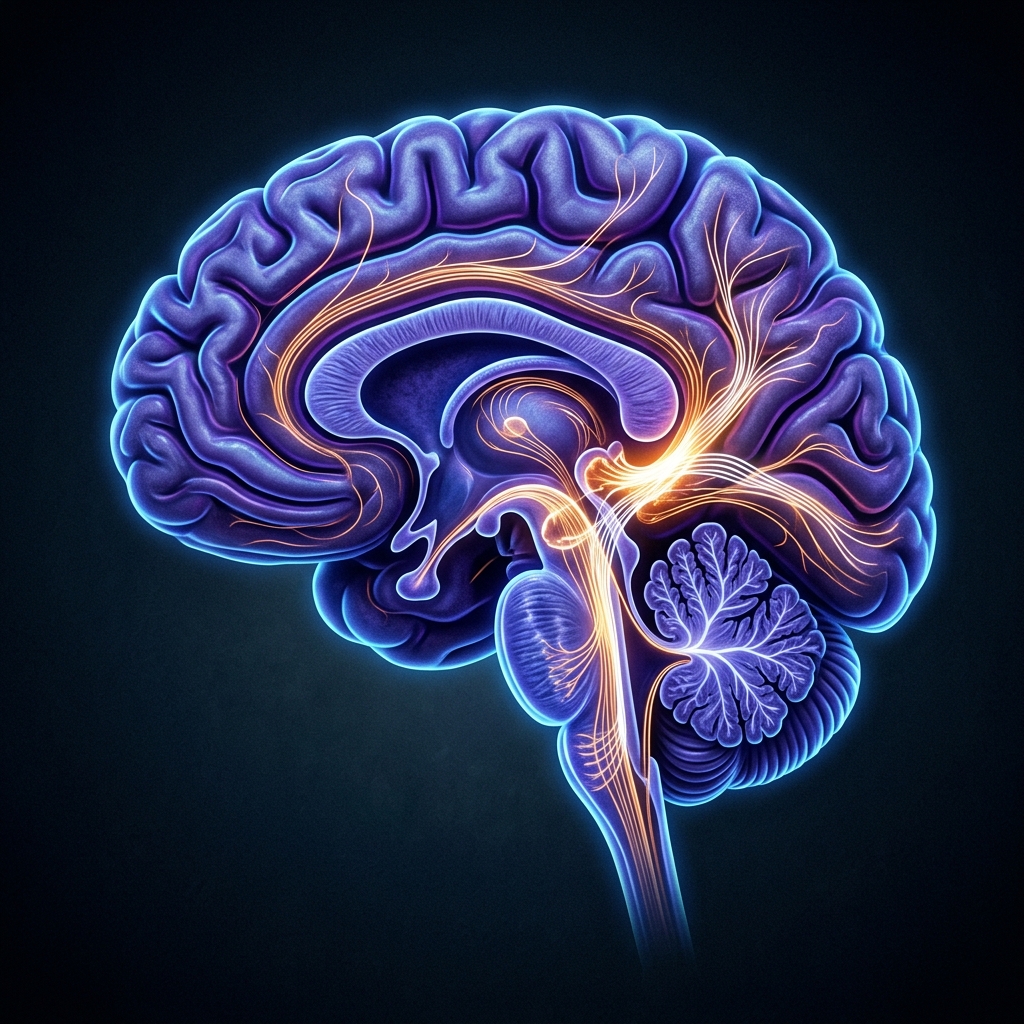
When you mention tinnitus to your doctor, the conversation usually goes one of two ways: they check your ears, find nothing structurally wrong, and either shrug or tell you to "learn to live with it." Or they prescribe a masking device and call it a day.
But neuroscientists have been quietly revolutionizing our understanding of this condition. What they've discovered is alarming in the best possible way: tinnitus is not primarily an ear condition. It is a brain condition. And this distinction changes everything about how we should approach treatment.
Researchers at Harvard Medical School's affiliated institution Mass Eye and Ear published findings in Scientific Reports (2023) demonstrating that even people with clinically normal hearing tests show damage at the level of the auditory nerve — and that this damage triggers compensatory hyperactivity in the brain's auditory processing centers, generating the phantom noise we call tinnitus.
The Central Gain Theory: Your Brain Is Turned Up Too High
Your auditory system operates like a sophisticated amplifier. Under normal conditions, when the ears send robust signals, the brain processes them at a calibrated gain level. But when hearing damage occurs — whether from age, noise, medication, or subclinical nerve damage — the signal from the ears becomes weaker. The brain detects this reduced input and then does something that seems logical but causes enormous problems:
It turns up its own internal volume to compensate.
This is what neuroscientists call the Central Gain Theory of tinnitus. The auditory cortex increases its spontaneous neural firing rate in an attempt to "hear more." The problem is that this amplified internal activity is then interpreted by the brain as actual sound. The result: phantom noise — ringing, buzzing, hissing, clicking — with no external source.
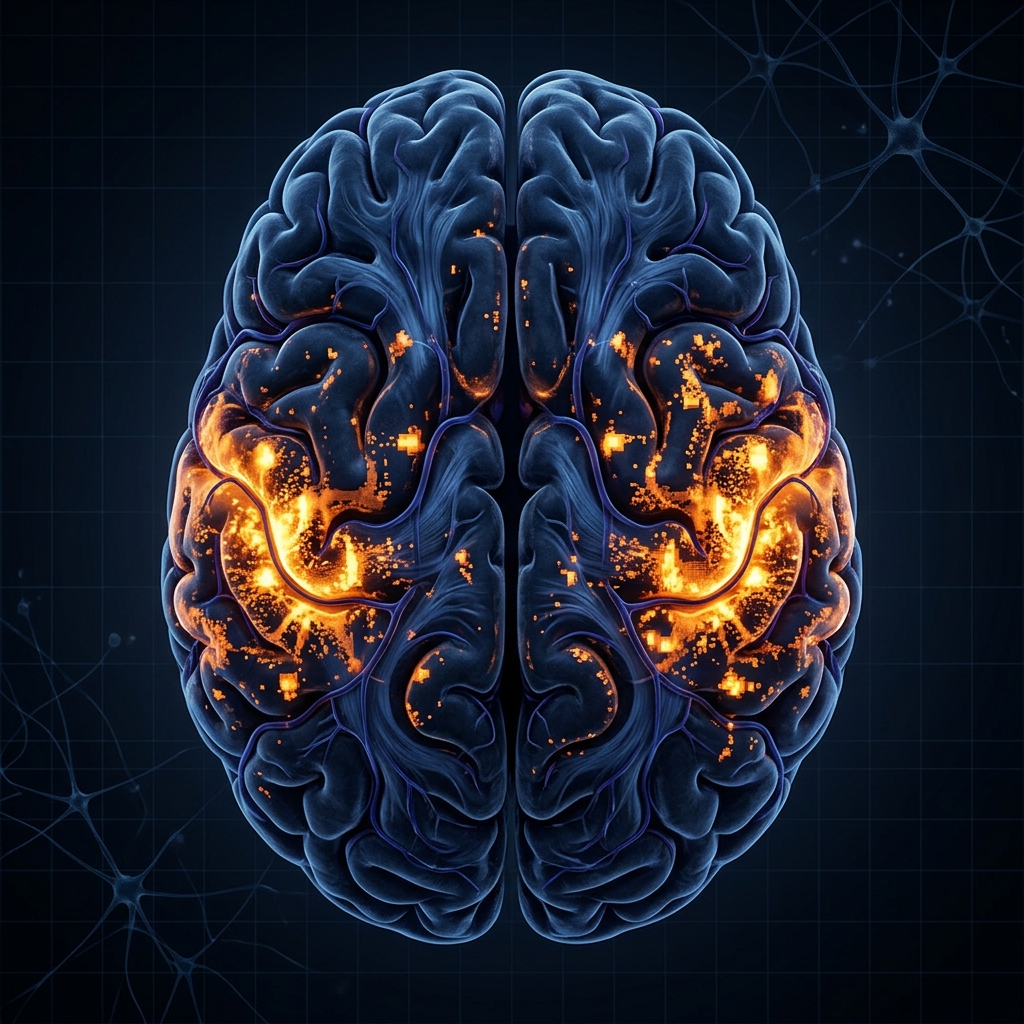
"We found evidence of 'hidden' hearing loss — damage to the auditory nerve that is not captured by conventional audiograms — in individuals who reported tinnitus but had normal hearing test results. This nerve damage appears to trigger compensatory central gain increases in the auditory cortex, generating the phantom sound perception."
The "Hidden" Hearing Loss Discovery
One of the most alarming findings of recent research is the concept of "hidden" hearing loss. For decades, audiologists have relied on the standard audiogram — a test that measures your ability to detect pure tones at different frequencies. If you pass, you're declared to have normal hearing.
But this test has a critical blind spot: it measures the outer hair cells in the cochlea, but says nothing about the health of the auditory nerve fibers that carry the signal to the brain. Research has now conclusively shown that you can have completely normal audiogram results while simultaneously having significant auditory nerve damage — invisible to conventional tests — that is now believed to be one of the primary triggers of tinnitus.
How Tinnitus Actually Develops — Step by Step
The 4-Stage Mechanism
The Predictive Coding Revolution
Beyond the central gain model, cutting-edge neuroscience has introduced a second framework: the Predictive Coding Theory of Tinnitus, gaining traction in peer-reviewed literature published in eLife Sciences and PNAS.
This model proposes that the brain is fundamentally a prediction machine. In tinnitus, the brain's prior expectation of silence is continuously overridden by amplified internal neural noise. The brain, unable to determine that this internal noise is not real, assigns it the status of a genuine sound.
"Under the predictive coding framework, tinnitus arises from an imbalance between the brain's prior predictions (expecting silence) and the likelihood signal (amplified internal neural activity). When the precision weighting of this internal signal is inappropriately high, the brain cannot suppress it as noise — it becomes a perceived phantom sound."
This framework explains something clinicians have observed for years but couldn't explain: why stress, anxiety, and sleep deprivation make tinnitus dramatically worse. These states all increase the "precision weighting" the brain assigns to internal signals, making the phantom more vivid and harder to ignore.
Why This Changes Everything About Treatment
If tinnitus were truly an ear problem, treating the ear would fix it. But study after study shows that even when cochlear damage is repaired or when a hearing aid perfectly amplifies external sound, tinnitus often persists. The brain has already rewired itself. The central gain stays elevated.
This is why researchers are now focusing on interventions that target the brain's auditory network rather than the ear itself. The most promising approaches work through multiple mechanisms simultaneously:
- Reducing neuroinflammation in auditory cortex circuits — key compounds: Curcumin, Resveratrol, Omega-3s
- Supporting GABA-ergic inhibition — GABA is the brain's primary "brake" neurotransmitter. L-Theanine and Magnesium specifically restore inhibitory balance
- Protecting auditory nerve integrity — B12, Folate, and Vinpocetine support the myelin sheaths of auditory nerve fibers
- Improving cochlear blood flow — Ginkgo Biloba's most well-documented effect is improving microcirculation in cochlear capillaries. Multiple clinical trials show significant effects on perceived tinnitus loudness
- Antioxidant protection of hair cells — Grape Seed Extract, NAC, and Vitamin E have demonstrated hair cell-protective effects in audiology research
Formulas Addressing Tinnitus at the Brain Level
Our research team evaluated formulas specifically for their neurological ingredient profiles — compounds that address central gain, GABA-ergic tone, auditory nerve integrity, and neuroinflammation simultaneously.



Affiliate disclosure: RoyalStream earns a commission from qualifying purchases at no extra cost to you. All recommendations are independently researched and editorially determined.
The Bottom Line
Tinnitus is not your ears failing. It is your brain — specifically your auditory cortex and its interconnected emotional and attention networks — in a state of dysregulation. The ears may have been the trigger, but the brain is the maintainer.
This paradigm shift, validated by Harvard, Michigan, and a growing body of international research, has profound implications: the strategies most likely to reduce tinnitus are those that address the brain's neurochemical environment, not just the ear's physical structure. Understanding your condition at this level is the first step to making genuinely informed decisions about how to manage it.
Scientific References
- Kujawa, S.G., Liberman, M.C. (2009). "Adding insult to injury: cochlear nerve degeneration after 'temporary' noise-induced hearing loss." Journal of Neuroscience. Harvard / Mass Eye and Ear. PubMed ID: 19940188
- Schaette, R., McAlpine, D. (2011). "Tinnitus with a normal audiogram: physiological evidence for hidden hearing loss." Journal of Neuroscience. DOI: 10.1523/jneurosci.2156-11.2011
- Eggermont, J.J., Roberts, L.E. (2004). "The neuroscience of tinnitus." Trends in Neurosciences. DOI: 10.1016/j.tins.2004.10.007
- Sedley, W. et al. (2016). "An integrative tinnitus model based on sensory precision." Trends in Neurosciences. DOI: 10.1016/j.tins.2016.06.004
- World Health Organization. (2023). "World Report on Hearing." who.int