It happens to thousands of tinnitus sufferers daily. You're sitting quietly, the ringing is at its baseline — and then you press your finger against your jaw while thinking, or turn your head sharply, or clench your teeth for a moment. Suddenly the ringing intensifies. Changes pitch. Shifts from one ear to the other.
For years, doctors dismissed this as coincidence or anxiety. A growing body of neuroscience research now says it is neither. It is a precisely documented neurological phenomenon called somatic modulation of tinnitus — and understanding it changes everything about how we approach treatment.
Dr. Susan Shore and her team at the University of Michigan Kresge Hearing Research Institute have spent over two decades documenting "somatosensory tinnitus" — a form of the condition where touch, movement, and muscle tension in the head and neck directly modulate the phantom auditory signal. Their work has been published in Science Translational Medicine and PNAS.

The Anatomy Behind the Phenomenon
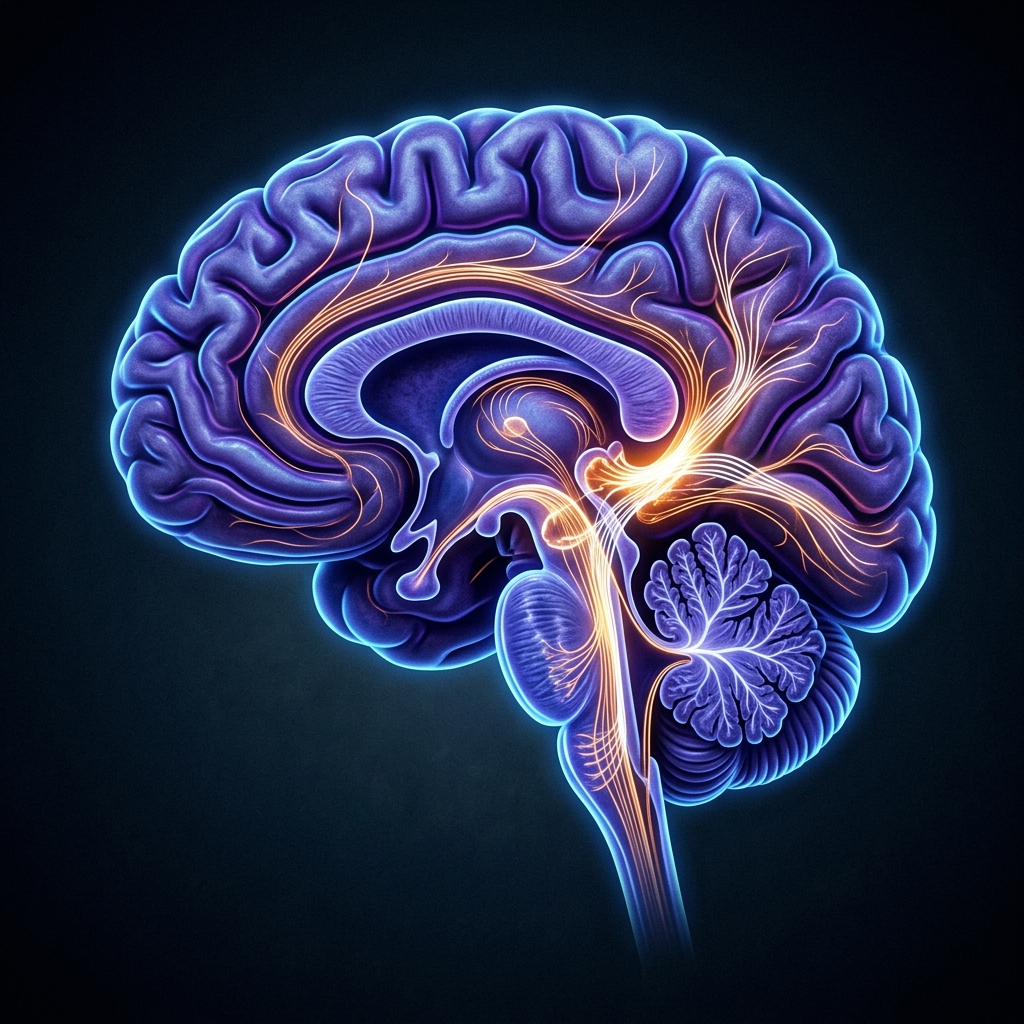
To understand why touching your face changes your tinnitus, you need to understand one specific structure: the dorsal cochlear nucleus (DCN).
The DCN is a small region in your brainstem that acts as the first major relay station for auditory signals traveling from your ear to your brain. What makes it critical — and clinically fascinating — is that it receives input from two completely different systems simultaneously:
- The auditory system — signals from the cochlea (inner ear)
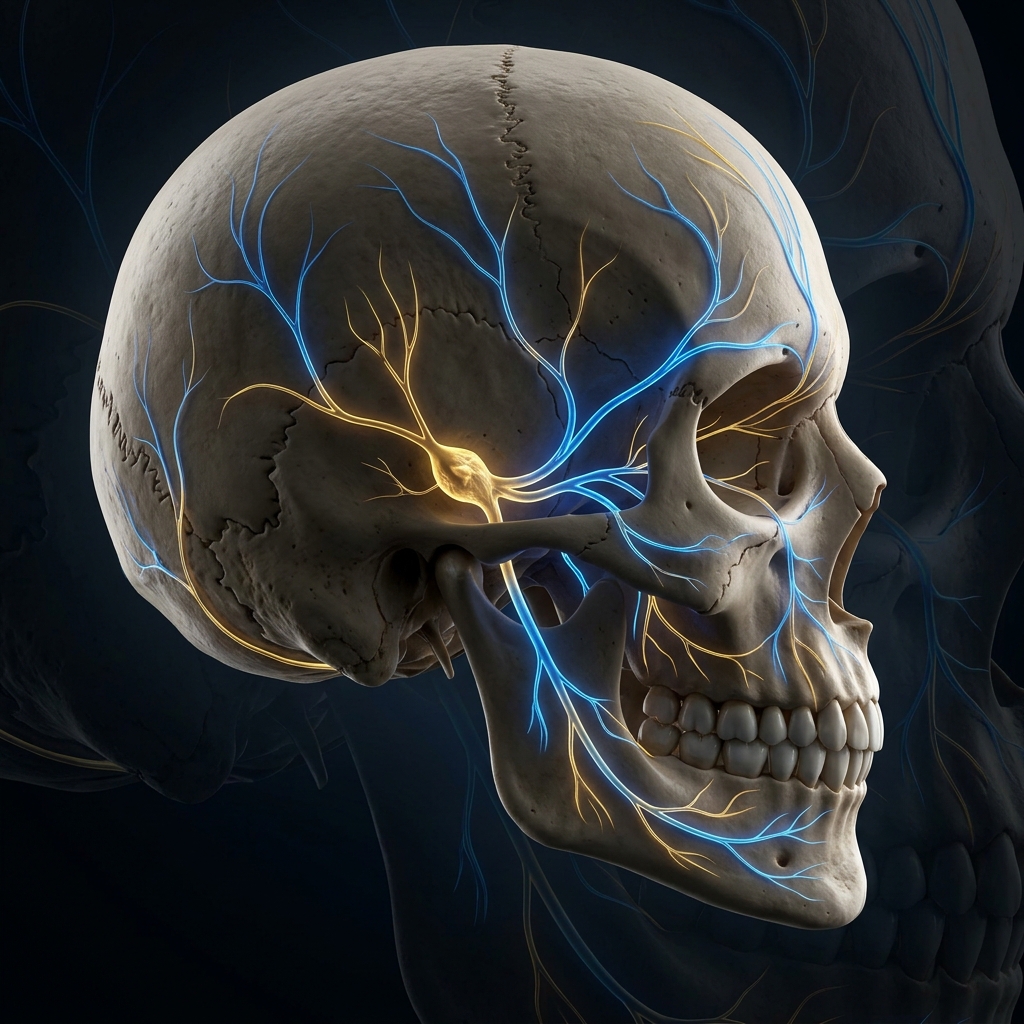
- The somatosensory system — signals from touch receptors in your jaw, face, neck, and scalp via the trigeminal and upper cervical nerves
Under normal conditions, these two inputs are carefully balanced. The DCN uses this dual input to help localize sound in space — essentially comparing what it hears with what it feels to determine where a sound is coming from.
What Goes Wrong in Tinnitus Patients
After cochlear damage — whether from noise exposure, aging, or other causes — auditory input to the DCN becomes weaker and disorganized. The somatosensory input, however, remains intact. This creates a critical imbalance.
The DCN, now receiving drastically less auditory information than usual, undergoes a process called homeostatic plasticity: it essentially turns up its own sensitivity to compensate. But because both auditory and somatosensory inputs feed into the same neurons, this increased sensitivity affects the somatosensory pathway too.
The result: physical sensations from your jaw, face, and neck now have exaggerated influence over the DCN's firing patterns — and since those patterns are already generating phantom sound, any additional somatosensory input modulates that phantom in real time.
How Touch Reaches Your Tinnitus Circuit
"After hearing damage, somatosensory neurons in the dorsal cochlear nucleus become hyperactive. These overactive nerves maintain increased spontaneous activity in auditory processing centers, which the brain interprets as tinnitus. Physical manipulation of the head and neck can transiently modulate this activity."
Who Is Most Affected?
Research suggests that between 68–80% of tinnitus patients can modulate their tinnitus through head, neck, or jaw movements. The condition is so prevalent that researchers have given it a clinical name: somatic tinnitus or somatosensory tinnitus.
The groups most likely to have somatic tinnitus include:
- People with temporomandibular joint (TMJ) disorder — where jaw joint dysfunction causes chronic somatosensory hyperactivity
- People with cervical spine problems — neck injuries or chronic tension affecting upper cervical nerves
- People with teeth grinding (bruxism) — sustained jaw tension chronically overstimulates trigeminal pathways
- People who experienced whiplash or head trauma — disrupting the normal balance of cervical and auditory inputs
The Clinical Self-Test
You can test your own somatic modulation at home. Find a quiet moment and try each of the following. Note if your tinnitus changes in any way:
- Clench your jaw firmly for 5 seconds, then release. Did your tinnitus change?
- Press two fingers firmly against your jaw joint (just in front of your ear) for 10 seconds.
- Turn your head slowly to the far left and hold for 10 seconds. Then to the far right.
- Tilt your head so your ear approaches your shoulder and hold for 10 seconds each side.
- Press firmly on the muscle at the back of your neck (just below the skull) for 10 seconds.
If any of these consistently change your tinnitus, you likely have a significant somatic component. Share these findings with your healthcare provider — it is clinically meaningful and can guide treatment decisions.
What This Opens Up for Treatment
The discovery that somatic pathways modulate tinnitus has opened an entirely new therapeutic window. Dr. Shore's team at Michigan developed a device — bimodal auditory-somatosensory stimulation — that deliberately delivers carefully timed electrical stimulation to the cheek simultaneously with tones played through headphones. The goal: to desynchronize the hyperactive DCN firing that generates tinnitus.
Their 2022 clinical trial published in Science Translational Medicine showed statistically significant reductions in tinnitus loudness and intrusiveness after 6 weeks of treatment.
"Physical therapy targeting the cervical spine and temporomandibular joint in patients with confirmed somatic modulation resulted in significant reduction in tinnitus handicap inventory scores at 12 weeks. The same physical manipulation that could worsen tinnitus (when uncontrolled) could be precisely directed to modulate and reduce symptoms."
Practical Implications Right Now
While bimodal devices are still emerging commercially, the somatic tinnitus research has immediate practical implications:
- Address jaw tension: TMJ treatment, night guards, and jaw relaxation exercises have helped many somatosensory tinnitus patients reduce severity.
- Cervical spine care: Physiotherapy targeting neck muscle tension — particularly in the upper cervical region — can reduce the somatosensory hyperactivation feeding into the DCN.
- Posture awareness: Chronic forward head posture increases tension on upper cervical nerves. Correcting it reduces baseline somatosensory noise in the system.
- Nutritional support for the DCN environment: GABA-ergic tone, magnesium, and B-vitamin status all affect neural hyperexcitability. Targeted supplementation addresses the neurochemical basis of DCN hyperactivity.
Formulas That Target Auditory Nerve & DCN Support
Based on ingredient profiles specifically aligned with the neurochemical factors that affect somatosensory tinnitus — GABA, Grape Seed Extract, Magnesium, B12, and Green Tea — our team rates these formulas highest for neurological auditory support.


Affiliate-Offenlegung: RoyalStream verdient eine Provision aus qualifizierten Käufen ohne zusätzliche Kosten für Sie. Alle Empfehlungen werden unabhängig recherchiert.
The Bottom Line
If your tinnitus changes when you touch your face, clench your jaw, or turn your head — that isn't a quirk. It is a clinical finding with a documented neurological explanation. The trigeminal nerve and the dorsal cochlear nucleus form a pathway that directly connects physical sensations in your head and neck to your phantom auditory signal.
Understanding this mechanism gives you a new set of evidence-based levers to pull: addressing jaw tension, improving posture, working with cervical spine specialists, and supporting the neurochemical environment of the auditory brainstem through targeted nutrition. None of these alone will silence tinnitus completely. Together, they represent the most scientifically grounded approach to meaningful, sustained reduction.
Wissenschaftliche Referenzen
- Shore, S.E., Zhou, J., & Bhatt, S. (2016). "Trigeminal pathways to the dorsal cochlear nucleus." Journal of Comparative Neurology. NIH PubMed. DOI: 10.1002/cne.24174
- Shore, S.E. et al. "Auditory-somatosensory bimodal stimulation desynchronizes brain circuitry to reduce tinnitus." Science Translational Medicine. University of Michigan Kresge Hearing Research Institute.
- Sanchez, T.G. & Rocha, C.B. (2011). "Diagnosis and management of somatosensory tinnitus." Clinics (São Paulo). DOI: 10.1590/S1807-59322011000600028
- Levine, R.A. (2004). "Somatic tinnitus." Progress in Brain Research. NIH PubMed. DOI: 10.1016/S0079-6123(03)46001-5
- Ralli, M. et al. (2023). "Somatic modulation in chronic tinnitus." Frontiers in Neurology. DOI: 10.3389/fneur.2023.1158895